

Market trends, social studies, neuroscience, marketing insights, and consumer behavior research all give us valuable clues about how to structure a digital presence that brings us closer to the ultimate goal: turning interested prospects into paying customers. These studies, increasingly detailed and up-to-date, help us better understand audiences and their decision-making processes. However, relying solely on this kind of research can turn your strategy into a kind of “guesswork,” which may or may not work.
Given this, and recognizing the potential of digital channels to deliver real results, why not invest in A/B testing to gather real data and make more confident decisions?
What is A/B Testing?
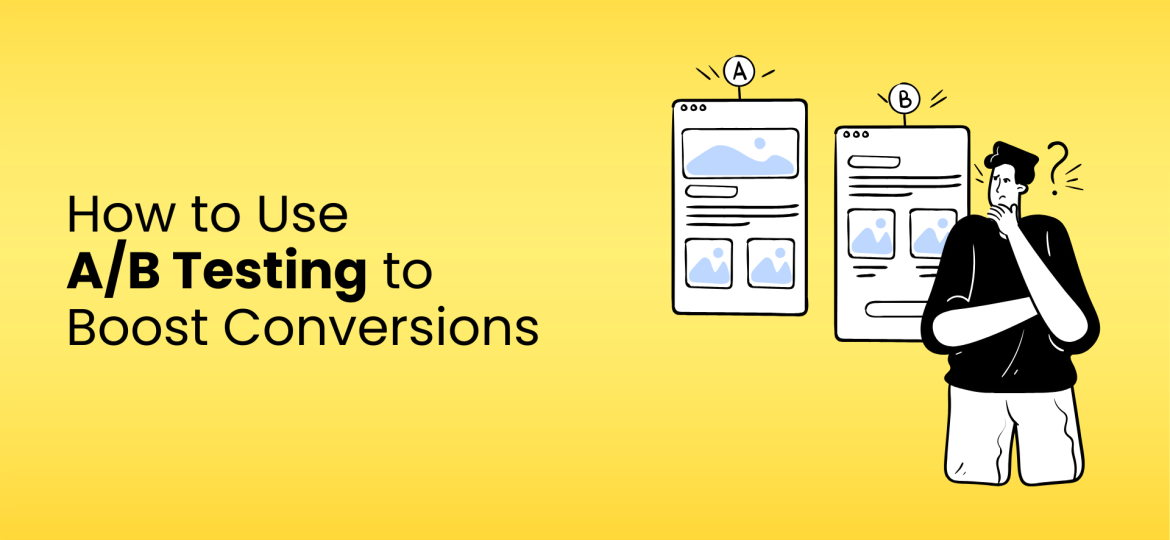
A/B testing allows you to compare two versions of content to see which one has a greater impact on a target audience. For example, at HUB Ativo, when we work on a landing page designed to drive conversions, we might create two different buttons with distinct colors and calls-to-action (CTAs) and track which one attracts more attention and generates more clicks. At the same time, we can see which version underperforms.
This approach lets us identify the more effective version and remove the one that doesn’t deliver results, because we gain a deeper understanding of what captures interest and drives conversions.
While the process is straightforward—essentially a comparison followed by data analysis—it provides valuable insights into your audience, including their interests and behaviors. Over time, these insights help shape consistent positioning for your brand, aligning your digital presence with the needs and preferences of your audience.
Should I Create Completely Different Versions?
The answer is: it depends. There are many ways to run A/B tests, and sometimes small changes are enough to make a big difference.
For instance, imagine running a remarketing campaign on Meta Business with the goal of generating sales. In one ad, you could keep the image and change the description, or experiment with different CTAs. Alternatively, you could change the image but keep the text, or even adjust the target audience. This way, you can clearly see, without guessing, who is genuinely interested in what your business has to offer.
The campaign, running on Facebook and Instagram, generates data in Meta’s built-in analytics, allowing you to identify which ad performs best, based on form submissions, link clicks, or message responses. While this data is automatically generated, it needs to be monitored to make ongoing adjustments and optimize the campaign to achieve real results.
A/B Testing on Websites
A/B testing on websites helps you understand what truly works for your audience and optimize every element to increase conversions. Buttons with different colors or texts, forms, headlines, images, or even page layouts—any change can influence how visitors interact with your site. By testing and analyzing results, we can determine which elements capture attention, drive clicks, and lead to concrete actions, such as quote requests or sign-ups.
This approach transforms visitors into customers, improves user experience, and reduces uncertainty in marketing decisions, ensuring that every click coming from social media or digital campaigns is maximized. Even small, data-driven changes can produce significant results and provide a foundation for future optimizations, keeping the website aligned with the audience’s interests and behavior.
Common Mistakes in A/B Testing
Although A/B testing is conceptually simple, it can easily fail if not applied correctly. A common mistake is testing multiple changes at once, such as images, text, and CTAs, which makes it impossible to determine which element actually drove results. Another issue is ending the test too early, before collecting enough data for reliable conclusions. Many companies also focus only on superficial metrics, like clicks or likes, while ignoring more important indicators, such as actual conversions. Finally, some fail to implement the results, continuing to use content or layouts that do not work. Avoiding these mistakes is essential to make the most of A/B testing and ensure decisions are based on real data, not assumptions.
How to Start Using A/B Testing (Step by Step)
Getting started with A/B testing is simpler than it seems and can quickly generate impactful results when done strategically. Follow these steps:
Define your goal – For example, increase clicks, leads, or sign-ups.
Choose what to test – This could be a button, an image, a headline, or your audience segment.
Create variations – Version A and version B, with clear, measurable differences.
Run the test – Show each version to different segments of your audience.
Analyze results – Compare key metrics, such as clicks, conversions, or interactions.
Implement the winner – Keep what works and remove what doesn’t deliver.
Repeat continuously – Each test provides insights for future optimizations, whether on social media, landing pages, or websites.
By following this process, your business makes data-driven decisions that continually improve digital performance.
Smart Strategies = Real Results
A/B testing is a powerful tool to turn data into decisions, visitors into customers, and digital efforts into measurable results. When combined with a strategic social media management plan and optimized websites or landing pages, it ensures every interaction is maximized, creating meaningful experiences aligned with your audience.
At HUB Ativo, we help businesses build a consistent digital presence by applying A/B testing on websites, landing pages, and social media content, ensuring every action contributes to business goals. If you want to turn your digital traffic into real, measurable results, get in touch with us and give your online presence a boost.