

Why prompts matter
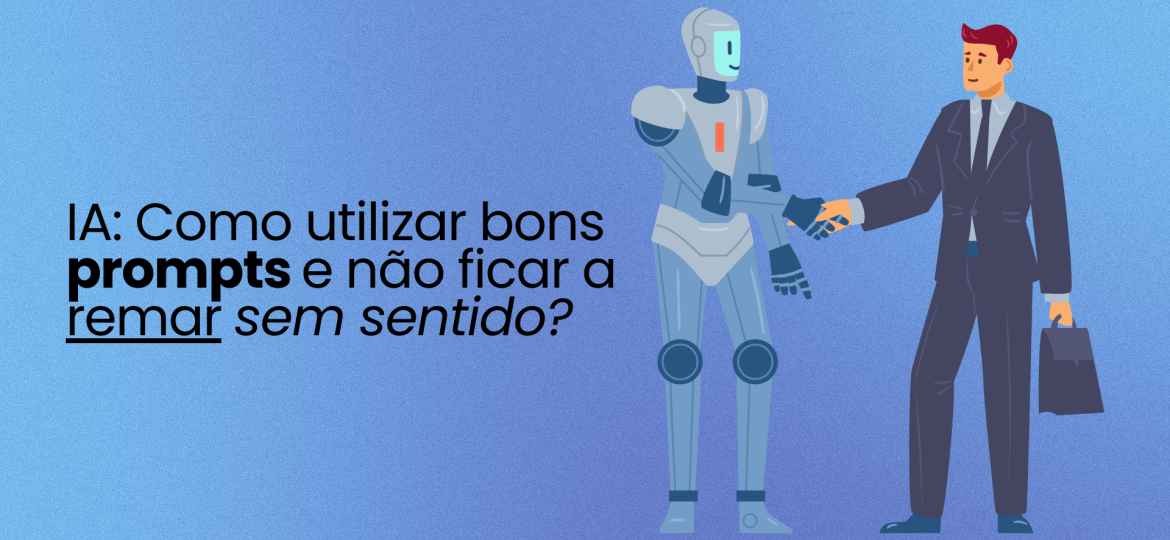
With the growing use of artificial intelligence and the increasing awareness of how useful these tools can be in everyday life, it has become almost automatic to check what AI has to say about a given topic. However, how can this technology be used in a truly effective way? How can you obtain answers that actually match what you are looking for when you turn to an AI application? The answer lies in prompts and, above all, in how they are structured.
Prompts are the instructions users give to AI to indicate what they want, how they want it, and in which context. In simple terms, prompts are the way you communicate your request to artificial intelligence. The clearer and more detailed the prompt is, the less generic the response tends to be.
Vague and unspecific questions usually lead to superficial answers that are of little practical use. More detailed prompts, with a clear objective and a well-defined context, tend to generate higher-quality responses that are far more aligned with the user’s original intention.
How to structure a good prompt
To create an effective prompt, start by clarifying a few basic points. Think about what you want, who the answer is for, what your objective is, and what format you expect the response to take.
Here is a simple example.
A generic prompt might be:
“Create a post about productivity.”A more detailed prompt would be:
“Create a short post about productivity for professionals who work remotely, using practical tips and an informal tone.”
Refinement through interaction
The best result does not always appear on the first attempt. The most effective approach is to maintain interaction, treat the use of AI as a conversation, and gradually refine the request. Adjusting the prompt, adding context, and giving feedback allows the AI to get closer to what you actually need and often helps generate new insights that go beyond the initial idea.
Asking the AI to take on a role
One commonly used technique that can improve the quality of responses is asking the AI to assume a specific role or profession. Phrases such as “imagine you are an architect with 20 years of experience” do not turn the AI into an expert, but they help define the perspective from which the answer should be given.
By assigning a role, you are guiding the AI on which knowledge to prioritise, how deep the response should go, and what kind of approach to adopt. This often results in more practical, focused answers that are better aligned with real-world professional contexts, especially when you are looking for guidance, analysis, or decision-making support. That said, this technique works best when combined with a clear objective and sufficient context. On its own, a role does not replace a good prompt; it simply complements it.
Conclusion
Ultimately, using artificial intelligence effectively does not depend on tricks or magic formulas, but on the ability to communicate clearly. AI responds according to what it is asked, and the better the prompt, the more useful the response will be. Treating these tools as part of a continuous process of adjustment and improvement allows you to stop “rowing without direction” and start moving with purpose. Artificial intelligence does not replace human thinking, but it can significantly enhance it when we know how to ask the right questions.